

How Texas insurers evaluate roof damage claims after storms.
When storms strike Texas, many homeowners ask: “How do insurance companies determine coverage for wind or hail damage?” While roof claims may seem different from health insurance premiums, auto insurance premiums, or even the lowest insurance premiums, they all rely on similar risk-based principles. In every type of insurance—whether it’s health, auto, life, or property—insurers evaluate various factors such as claims history, credit history, health status, driving record, and the likelihood of future losses to set premiums.
Coverage decisions for storm-damaged roofs also vary depending on these risk assessments. By understanding the insurance claim evaluation process, the documentation needed, and the key factors adjusters consider, Texas homeowners can make more informed decisions and ensure they have adequate coverage under their insurance policy.
Understanding Wind vs. Hail Damage
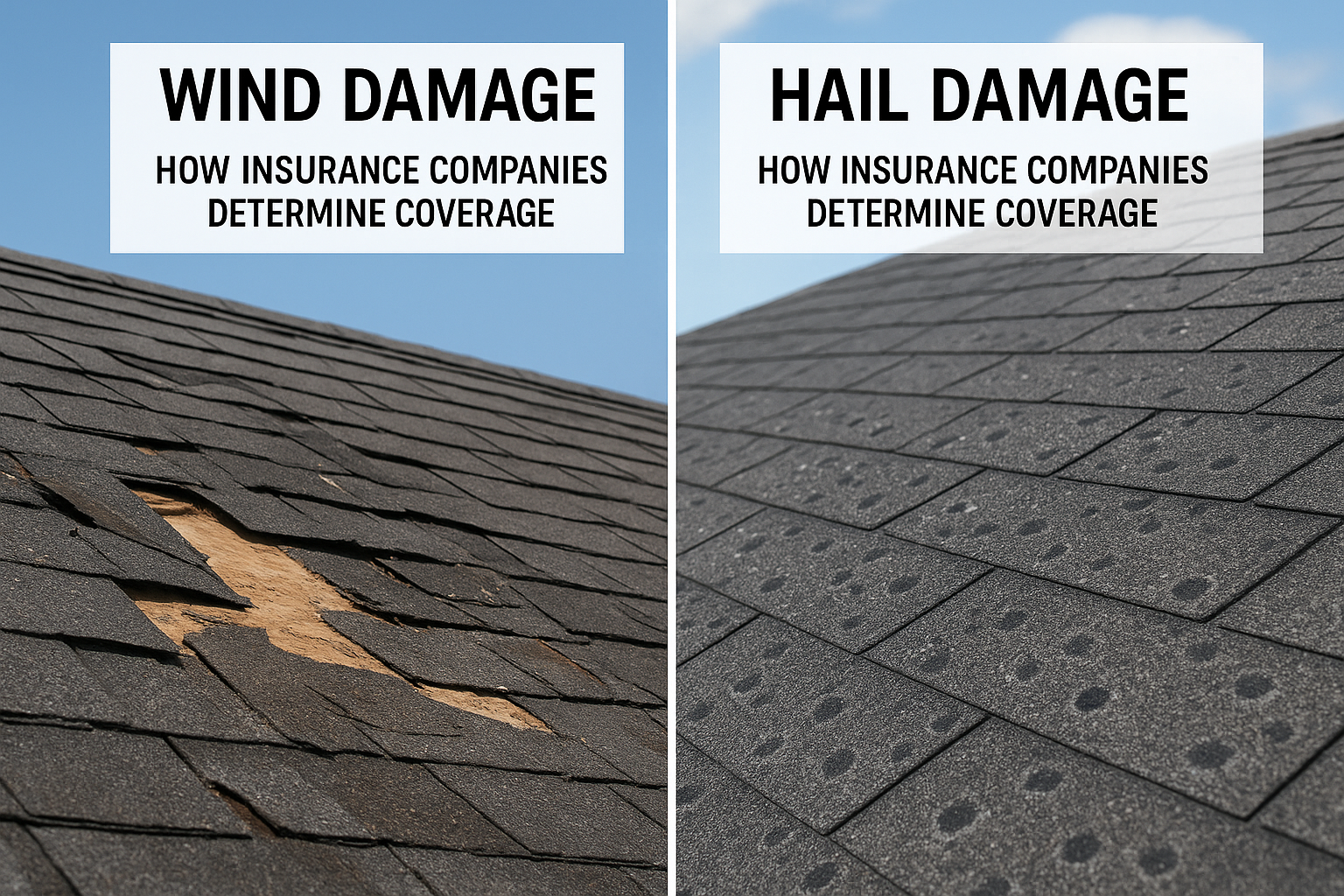
Not all storm damage is equal, and accurately assessing the source is crucial. In Texas:
Hail damage:
Hail can cause:
- Dents
- Bruising
- Granule loss on shingles or tiles
This type of damage is often subtle and may require a detailed inspection. If professionals later determine repair or replacement is needed, homeowners typically visit services such as roof repair or roof replacement pages (but coverage determination happens before repair decisions).
Wind damage
Wind may cause:
- Lifted or torn shingles.
- Damaged vents, gutters, or flashing.
- Interior leaks.
The extent of damage can significantly impact insurance coverage, deductibles, and potential compensation—especially in Texas, where storms frequently cause mixed wind and hail events.
How Insurance Companies Evaluate Claims
Insurance companies evaluate claims using a structured process to determine whether damage qualifies under your policy. Because coverage decisions can vary depending on the situation, insurers consider multiple factors during the insurance claim evaluation process.
This typically involves:
- Reviewing the claims history and any pre-existing conditions.
- Conducting an insurance adjuster roof inspection to verify the damages incurred.
- Assessing the damage and comparing it to your coverage options.
- Considering the coverage limit, the maximum amount payable, and whether the homeowner has adequate coverage.
Behind the scenes, insurance providers use statistics, financial theory, and detailed calculations to determine risk and evaluate claims. Factors such as age, market value, and credit history play a pivotal role in how insurers set insurance rates, determine payments, and interpret roof-related losses.
For instance, the same storm may cause different costs and levels of damage to various homes, leading to different coverage outcomes. While this process differs from how insurers rate a car or other types of property, the underlying risk evaluation methods are similar across the industry.
What Insurance Adjusters Look For
Several factors play a significant role in whether a claim is approved:
- Severity and type of damage: Minor wear-and-tear is usually excluded.
- Pre-existing conditions or previous roof damage.
- Policy terms, including deductibles and coverage limits.
- Claims history: Prior claims can affect insurance rates, including future health, auto, and life insurance premiums.
- Other factors: Age of property, use of smoke detectors, and property market value.
These elements help insurers decide on the maximum amount payable and ensure policyholders have adequate coverage.
How to Prove Storm-Related Damage
Homeowners can strengthen their claim by documenting damages incurred:
- Take time-stamped photos and videos immediately after the storm.
- Keep inspection reports from roofing professionals.
- Document interior leaks or water damage.
- Maintain receipts for temporary repairs and safety measures.
Proper documentation enables insurers to assess damage and accurately pay rightful compensation.
If storm-related damage later requires professional service, Texas homeowners often turn to storm damage repair specialists.
Common Reasons Claims Are Denied
Insurance claims for wind or hail damage can be denied for several reasons:
- Damage is considered wear-and-tear or maintenance-related.
- Insufficient documentation or proof of storm causation.
- Filing the claim after the deadlines.
- Prior pre-existing conditions were not disclosed in the policy.
Understanding these pitfalls gives homeowners more flexibility in navigating the claims process and increases the likelihood of receiving a fair settlement.
Frequently Asked Questions
By reviewing the insurance policy, claims history, statistical models, and various factors, insurers decide what qualifies under your plan.
They examine shingles, tiles, vents, gutters, and interior damage to verify storm-related damage incurred.
Policy terms, deductibles, prior claims, pre-existing conditions, and the extent of damage all play a significant role.
Storm damage is sudden and often widespread, while wear-and-tear develops gradually.
Insurance companies may classify damage as pre-existing or due to neglect, which can affect insurance coverage determinations.
Hail damage often shows as dents, bruises, granule loss, or cracked shingles.
Yes, if verified by the adjuster and documented properly under your insurance plan.
Through inspections, claims history, market value assessments, and professional reports.
Yes, if leaks result from storm-damaged roofing and are accurately assessed.
Photos, videos, professional inspection reports, receipts, and records of temporary repairs.
Making Informed Decisions
Knowing how insurance companies determine coverage is essential for Texas homeowners. By understanding the claims process, coverage limit, deductibles, and other factors, policyholders can make informed decisions, ensure adequate coverage, and maximize the potential impact of their claim.
Prepared homeowners can navigate the storm claims process confidently, ensuring fair settlements and protection of their property. Understanding these details can also help when setting health, auto, or life insurance premiums.
Why Homeowners Choose Fireman Roofing TX
“The quality of the work is outstanding—my roof looks great, and I feel confident knowing it was done right. They also helped navigate the insurance process, which was a huge help. I highly recommend Fireman Roofing to anyone in need of roofing work. Honest, skilled, and dependable—everything you want in a contractor!”
“Initially contacted Fireman Roofing for some roofing trim replacement. Upon arrival for a free inspection and quote, Matthew recommended reaching out to insurance for a total roof replacement. This made me nervous since we’ve never made a home insurance claim, but Matthew assured me that insurance would likely cover the roof. Insurance wasted no time with the approval, and Matthew and his team got our roof knocked out just a couple of days later. I highly recommend Matthew and his team for their professionalism, efficiency, and expertise!”
“Matt and the crew did an excellent job on my roof, interior, and garage repairs. He helped guide me through a tenuous process with my insurance company and guaranteed I was able to get the claim handled and all repairs made. Highly recommended!”
Your Home. Your Safety. Our Priority.
For over a decade, Fireman Roofing TX has proudly served our Texas community with honesty, integrity, and craftsmanship that lasts. From storm inspections to long-term protection, our knowledgeable team ensures your home is always in good hands.
Call us at 817-455-9342 and let our off-duty firefighters deliver the reliable roofing service you deserve.